


Local Leaders

Leveraging the Smart Middle: The Case for Nebraska’s Tech, Talent & Transformation
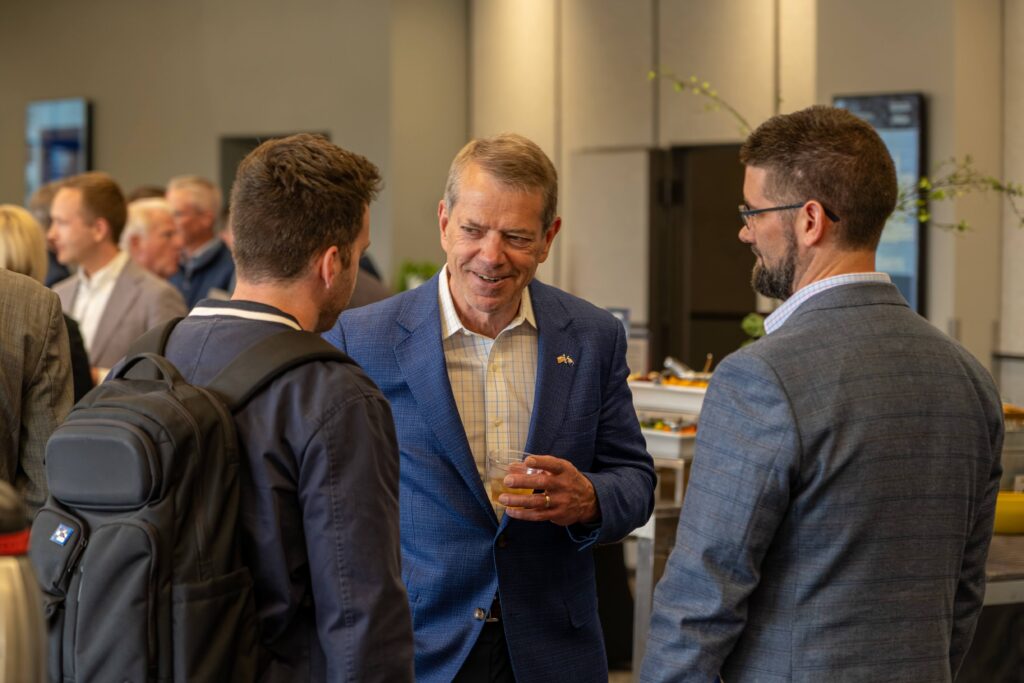
The momentum behind the Go Big Future series continued on May 20 at the Scott Conference Center in Omaha, where business leaders, entrepreneurs, educators and policymakers convened for Tech, Talent and Transformation.
Our core question was this: How can Nebraska strengthen its position in a rapidly changing economy by investing in technology, workforce development and cross-sector collaboration?
We know technology is no longer its own industry, but rather integrated everywhere. In real time, technology and AI are reshaping agriculture, healthcare, manufacturing, logistics, finance and every other sector powering Nebraska’s economy.
Transformation is upon us. How well Nebraska navigates that reality is up to us.
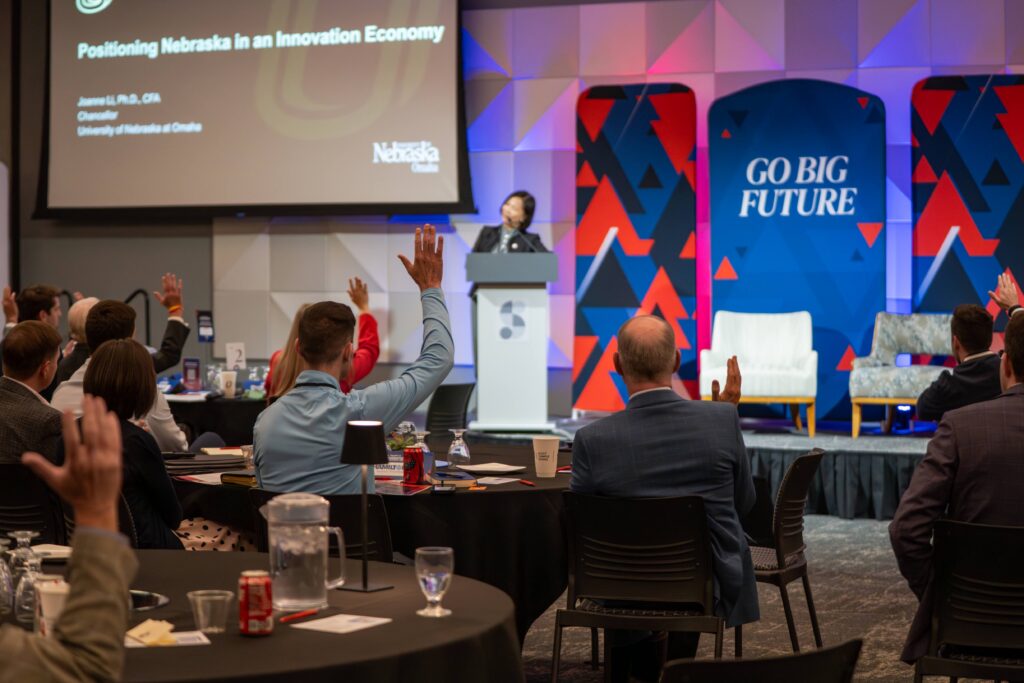
Case Study: Tarheel Transformation
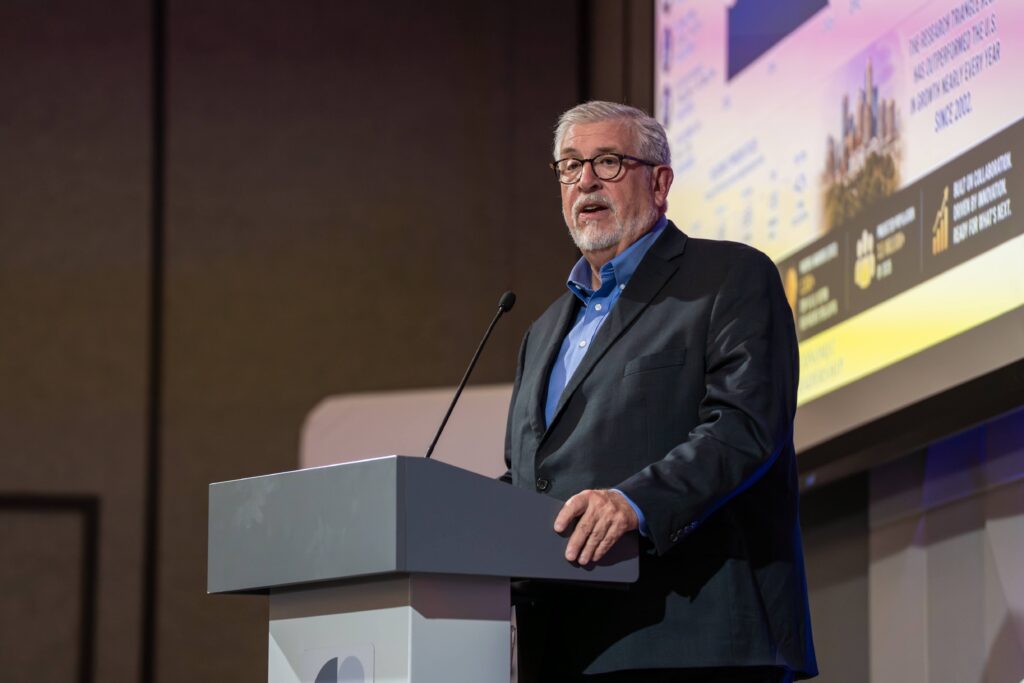
The afternoon opened with economist and site selection expert Ted Abernathy, managing partner of Economic Leadership, who traced North Carolina’s rise from economic uncertainty to one of the nation’s leading technology ecosystems.
Abernathy pointed to long-term alignment between business, higher education and government as the foundation behind the success of North Carolina’s famed Research Triangle. Progress at that scale, he argued, requires discipline and clarity about where a state can truly compete.
For Nebraska, that means leaning into industries where we already hold strategic advantages, including agtech and advanced manufacturing.
“Collaboration happens at the speed of trust. And no faster.”
— Ted Abernathy
Modernization and the Skills Gap
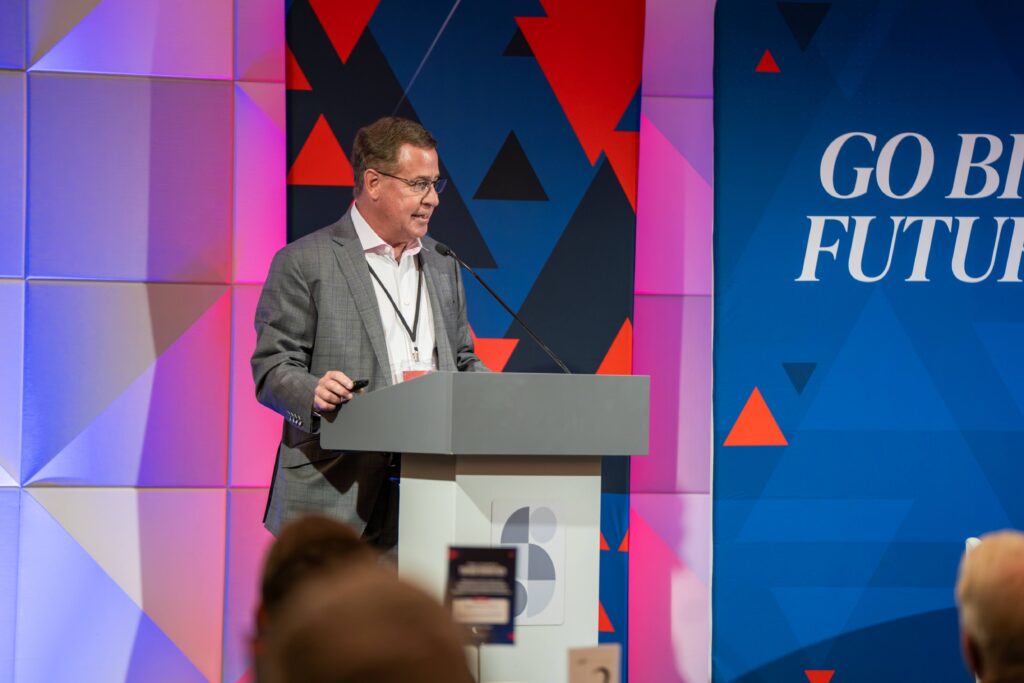
CQuence Health Board Chair Mike Cassling delivered a compelling case for modernization across every industry. His data illustrated the enormous financial cost of outdated systems and operational downtime and highlighted the growing divide between organizations embracing digital transformation and those falling behind.
Cassling also challenged the fear-based narrative surrounding AI and automation. Rather than replacing workers outright, emerging technologies are creating demand for new skills, new technical expertise and higher-value work.
In healthcare, AI-assisted imaging and predictive workflow tools are helping reduce burnout and return valuable time to doctors and nurses. In manufacturing, it’s improving productivity, safety and precision. Nebraska’s workforce strategy must evolve as quickly as the technologies reshaping the economy.
Rethinking Education and Certification
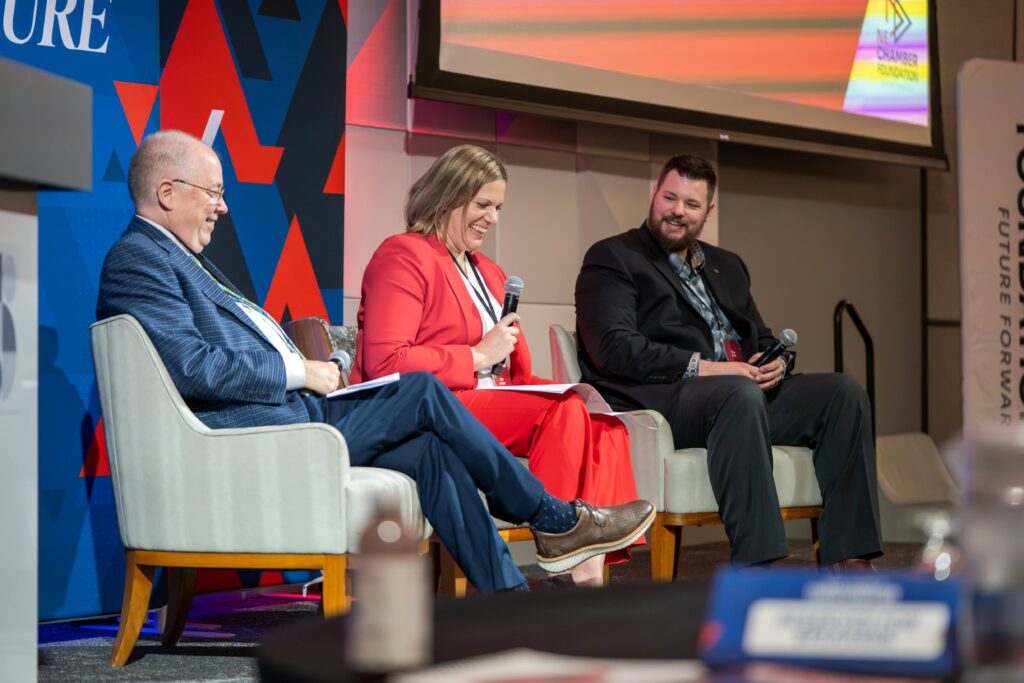
The forum’s first panel, moderated by Dr. Jim Sutfin, turned toward the future of workforce development and Nebraska’s manufacturing talent pipeline, with incredible insights from Gary Girard of Metro Community College, Nebraska Commissioner of Labor Katie Thurber and Doug Rood of Collins Aerospace.
Panelists emphasized the growing importance of short-term credentials, technical certifications and nontraditional learning models as more students pursue alternatives to the four-year degree pathway.
Nebraska is emerging as a national leader in building scalable noncredit learning systems designed to connect workers directly to in-demand careers. At the same time, state agencies are pursuing better alignment between workforce funding and career education strategies.
The conversation reflected a larger shift happening nationwide: Employers are increasingly prioritizing skills, adaptability and technical competency alongside traditional academic credentials.
Energizing Nebraska’s Startup Flywheel
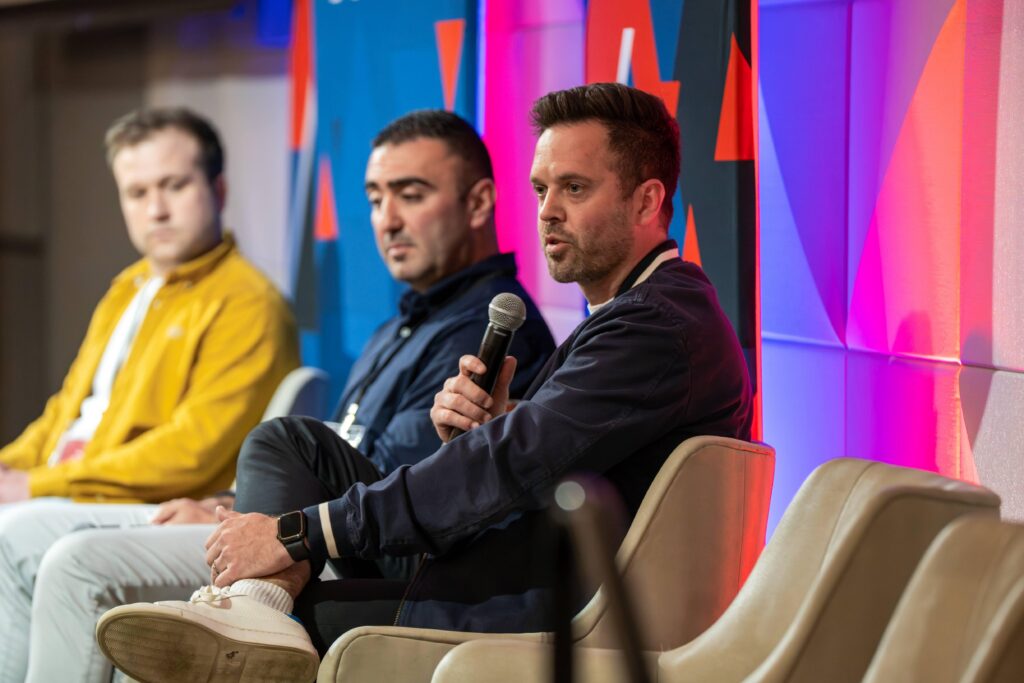
Nebraska Innovation Campus Director Kate Engel moderated the afternoon panel with founders Tullen Mabbutt of CompanyCam, Rick Knudtson of Workshop and Chafik Barbar of Marble Technologies, who shared firsthand perspectives on what it takes to build and scale high-growth companies in Nebraska.
The panel explored the advantages and challenges of growing a tech company in the state. While Nebraska’s early-stage investment ecosystem continues to strengthen, founders acknowledged that larger growth capital rounds often still come from outside the Midwest.
At the same time, Nebraska’s startup culture is becoming more connected and experienced with every new successful company. Leaders from firms like Hudl, Flywheel and CompanyCam are now mentoring, funding and inspiring the next wave of entrepreneurs in the Silicon Prairie.
That flywheel matters because talent attracts talent. Success sows confidence. Momentum compounds.
Challenging Nebraska’s Venture Capital Mindset
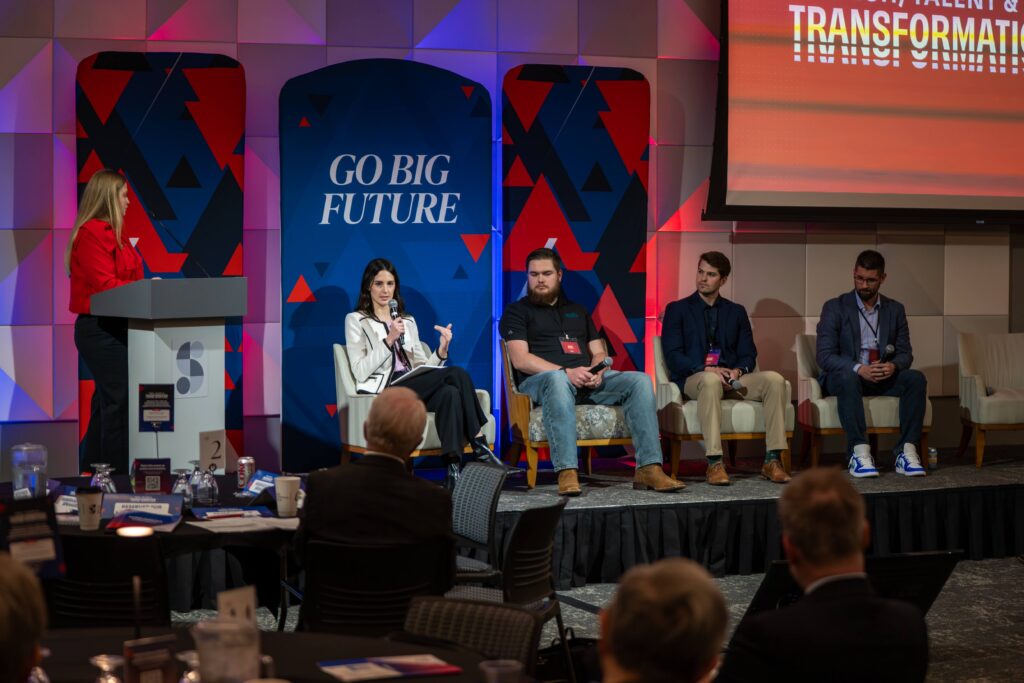
The final panel of the day focused on venture capital, innovation and the willingness to invest in bold ideas. Moderated by Open Range CEO Laurel Oetken, panelists Shelby Stratton of Invest Nebraska, Brennan Costello of The Combine, Jacob Hansen of ALA Engineering and Ben Jackson of Guardify discussed Nebraska’s cautious investment culture and the need for a greater appetite for early-stage innovation.
Is Nebraska missing an opportunity to keep more companies, manufacturing capacity and wealth creation inside the state by supporting more founders earlier? The state already offers a major advantage for industrial innovation because companies can work directly alongside their customers. In the engineering industry, for example, that means developing robotics solutions in feedlots and production environments alongside operators, solving real-world problems every day. Proximity feeds faster feedback loops, stronger partnerships and more practical innovation
Keynote: Nebraska’s Opportunity in the Smart Middle
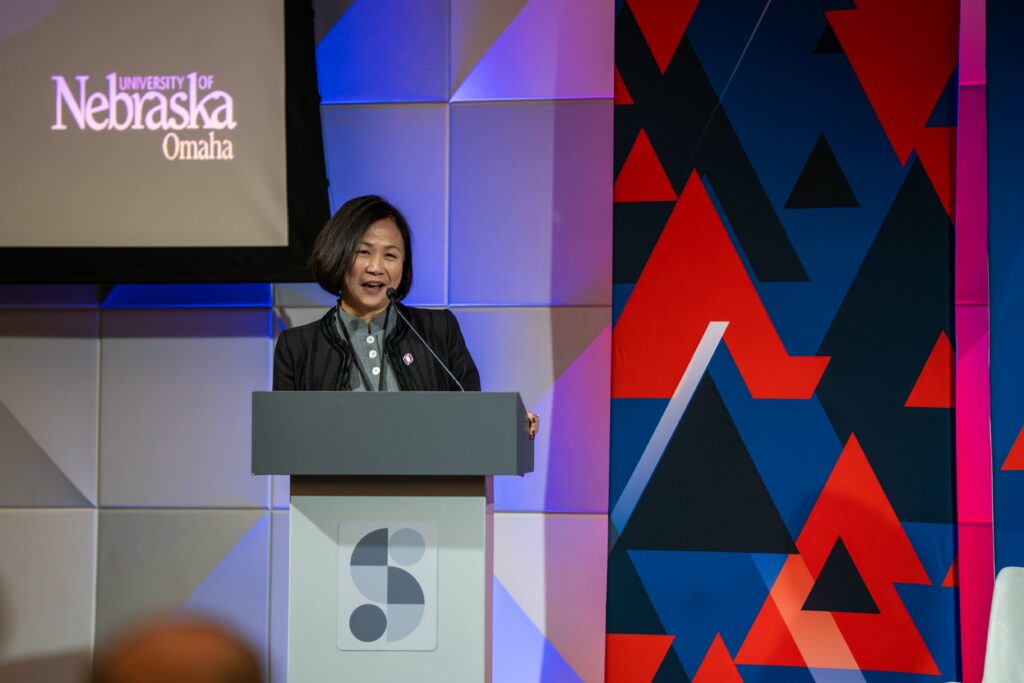
University of Nebraska at Omaha Chancellor Dr. Joanne Li closed the forum with an optimistic, future-focused keynote grounded on Nebraska’s competitive identity.
Li challenged the idea that success requires Nebraska to imitate Silicon Valley or Austin, Texas. Instead, she positioned the state as a leader within the nation’s “smart middle” — a place where advanced technologies can be applied directly to essential industries that power the broader economy.
Agriculture. Healthcare. Logistics. Manufacturing.
Nebraska is already home to renowned expertise in these sectors. The opportunity now is to become the best place in the country to modernize them.
Li highlighted UNO’s expanding investment in AI education and workforce readiness, including the launch of Nebraska’s first Bachelor of Science degree in AI and a university-wide initiative to train all staff in functional AI applications.
She also pointed to the growing success of UNO’s Career Connect platform, which has helped provide students with paid, hands-on learning opportunities at businesses across Nebraska.
“Talent retention is not about convincing people to stay. Talent retention is about creating a future worth staying for.”
— Chancellor Joanne Li
That idea captured the spirit of the entire forum.
What’s Next?
Nebraska’s future will not be built through a single policy, project or investment. It will take sustained alignment between education, industry, government and communities willing to think BIG about the next generation.
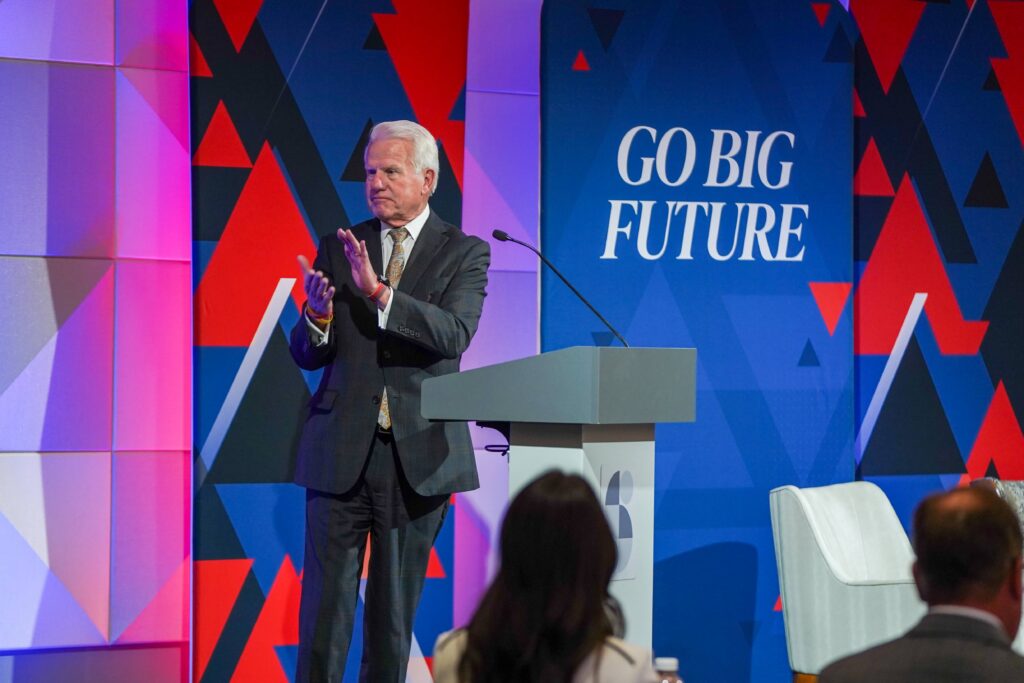
This fall, the Go Big Future series is leveling up. Join us in Kearney on August 17 and 18 for the Go Big Momentum Forum, our milestone event that will flip the script on our usual presentation-style format and put you in the driver’s seat of Nebraska’s BIG future.
Contact the NE Chamber team.
Drive alignment.
Build coalitions.
Find Solutions.
Grow Nebraska.
If you’re reading this and you’re still not sure what to do next, here are a few local ideas to get you started:
- Speak Up: Some of Nebraska’s best solutions will be built from the ground up. Advocate for local policies that grow workforce capacity, strengthen local infrastructure and diversify our energy portfolio at the grassroots level.
- Grow the Conversation: The topic of Nebraska’s BIG future shouldn’t be confined to state or local government. Talk about the data insights with your friends and neighbors. We win when everybody understands the game.
- Champion Solutions: Actively support or participate in local initiatives or pilot projects that aim to expand opportunity and remove barriers for Nebraskans and their families.
Ready to Go Big?