State Senators

Nebraska Impact Wrapped: Data, Decisions and Nebraska’s Bright Future
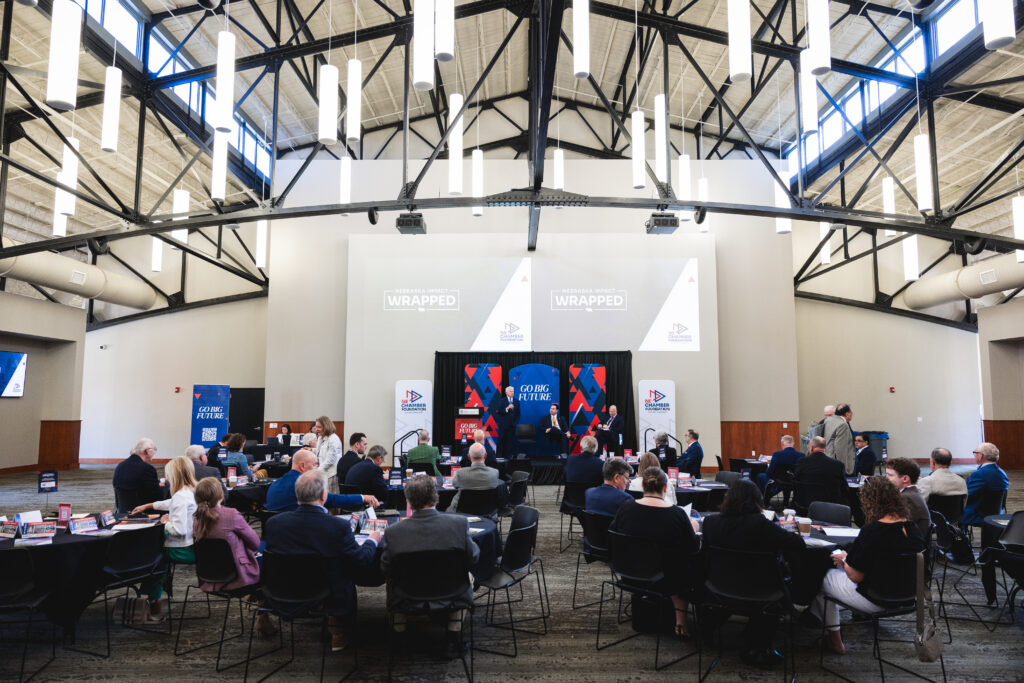
We convened a group of Nebraska lawmakers and University leaders at Nebraska Innovation Campus on April 22 for a forward-looking conversation about the state’s future. With the legislative biennium concluded, the moment was right to introduce the Go Big Future movement to Nebraska’s Unicameral leaders — and to dig into the ideas and partnerships required to tackle Nebraska’s most pressing challenges.
Nebraska Impact Wrapped was a data-focused deep dive designed specifically for policymakers to begin recalibrating the state to win in a modern economy.
The Forces Shaping Our Future
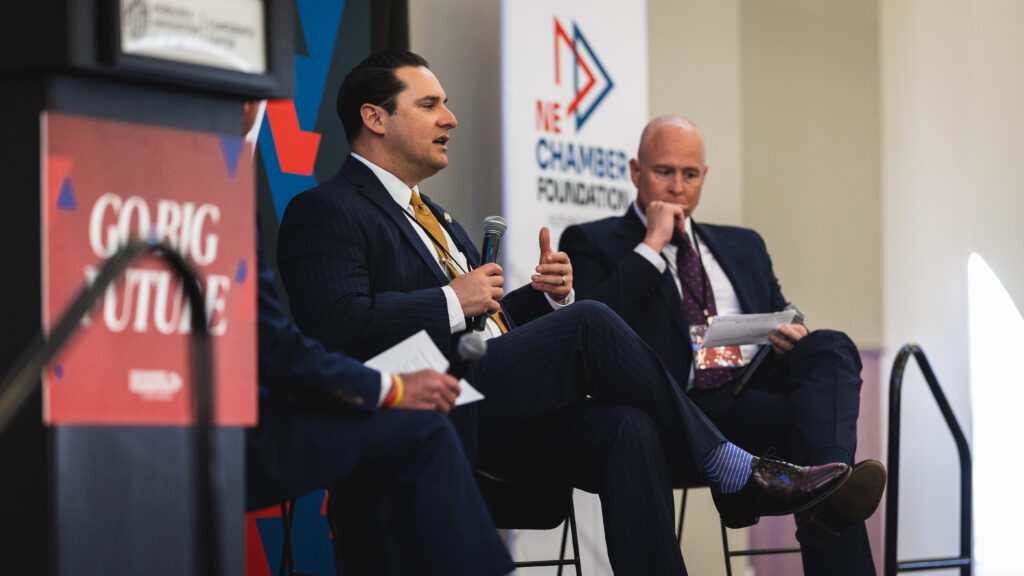
The morning opened with an unvarnished look at the forces reshaping Nebraska’s economic future. Moderated by Nebraska Chamber Interim President Matt Williams, the conversation with Greater Omaha Chamber President Heath Mello and Lincoln Chamber of Commerce President Jason Ball made it clear that economic competition has changed over the past 20 years, and especially since the pandemic.
States are more aggressive than ever in courting growth, reshoring is accelerating at a once-in-a-generation pace and talent — not capital — is increasingly the deciding factor. In this environment, companies aren’t starting with incentives; they’re asking more fundamental questions:
Is there workforce available?
Is energy accessible and ready to scale?
Can “pad-ready” sites be operational in 12-18 months?
Nebraska has real strengths, but we must consistently tell our story and align assets to compete at the highest level. As other states package opportunities with clarity and urgency, Nebraska must do the same.
That means sharpening how we communicate our strengths, showing up with purpose in competitive spaces and making smart, forward-looking investments that unlock business growth. As Heath Mello put it, hatching big plans is the easy part. Executing them — together — is what will determine whether Nebraska keeps pace or pulls ahead.
In today’s economy, competition is fiercer.
Workforce dynamics have changed.
We win by telling Nebraska’s story with purpose and clarity.
Recalibrating Nebraska’s Workforce Engine
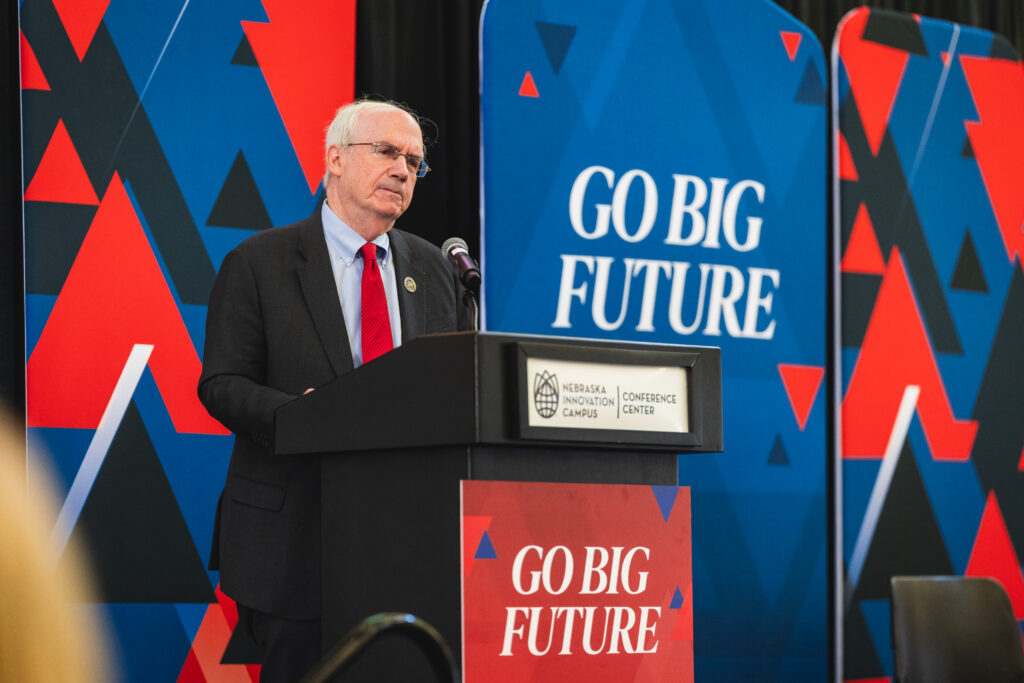
Nebraska’s workforce reality is shifting beneath us. More Nebraskans are aging out of the labor force than are entering it, and as Nebraska University System President Dr. Jeffrey Gold said, that imbalance requires a fundamental reset in how we think about talent development. If our workforce isn’t being born at the scale we need, it must be intentionally built. That begins with a clear recognition that education is infrastructure. It powers economic mobility, strengthens communities and serves as a long-term engine of Nebraska’s growth. But that system is under strain, as traditional student populations decline and the gap widens between evolving workforce demands and how we prepare people to meet them.
Closing the gap will require a more flexible, responsive approach to talent development. Nebraska must meet learners where they are — whether they are entering higher education for the first time, returning to the workforce with some college but no degree or, as we’re seeing more than ever before, reskilling to keep pace with changing industries.
At the core of that shift is a mindset change: preparing for the future is not reactive, but intentional.
Dr. Gold recalled Coach Fred Hoiberg’s three-word speech following Nebraska’s triumph over Vanderbilt in the 2026 NCAA Tournament. “When we look at Nebraska’s future,” he said, “We have to ask ourselves this question: Are you satisfied? There’s not a single person in this room that would answer ‘yes.’”
For the Husker men’s basketball team, the answer was a resounding, earth-shattering no.
“If we are satisfied,” Dr. Gold said, “we will lose every opportunity to build a better future together.”
The Talent Equation
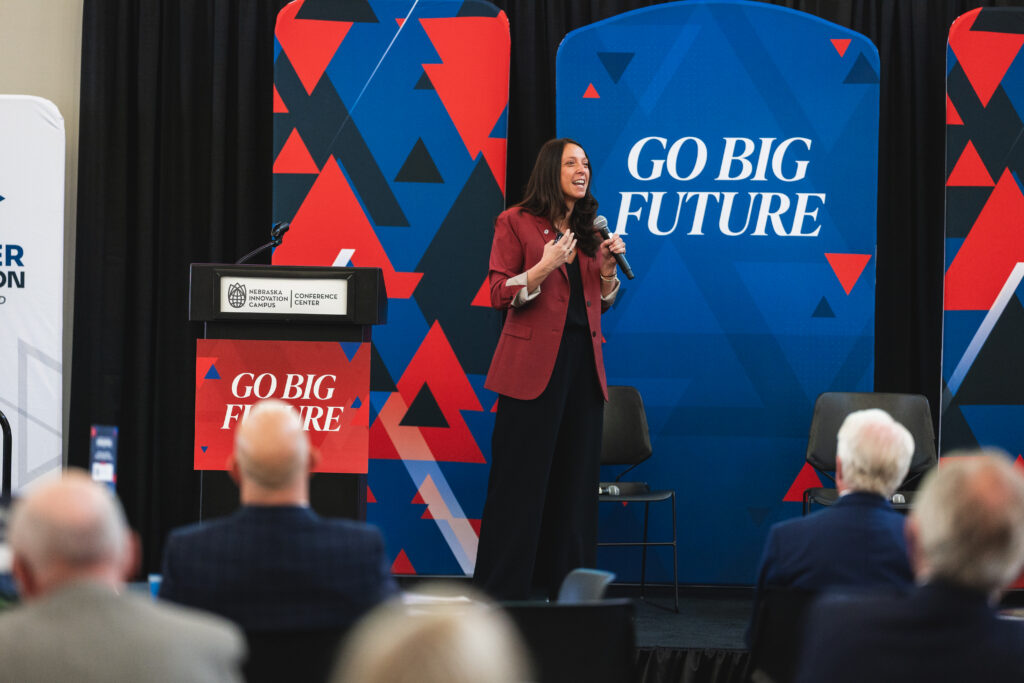
As a state, too often we ask, “Are we growing?” without asking, “How do we grow?”
The truth is, Nebraska is growing, though that growth is not evenly distributed throughout the state. In our rush to define what growth is or isn’t, it’s easy to miss the conversation about what makes growth possible.
Center for Public Affairs Research Director Dr. Josie Schafer demonstrated that states with growing populations also have growing economies, yet Nebraska too often focuses on diagnosing the challenge rather than accelerating toward solutions. At the center of the growth equation are two interconnected forces:
Job opportunities
Connection to place
On the jobs side, the data challenges several long-held assumptions. Access to jobs alone is not enough to drive population growth — it is the availability of good jobs that makes the difference. In fact, 78% of professionals surveyed who left Nebraska cited professional growth and development as their primary reason for going.
That reality raises a broader question of shared responsibility:
- Policymakers who can create a pro-growth environment.
- Employers who can invest in expansion and talent development.
- An ecosystem that supports innovation, entrepreneurship and continuous learning.
Nebraska’s comparatively low investment in research and development — and its lag in patents and science and engineering degrees — points to a clear opportunity to strengthen the foundation for long-term competitiveness.
Nebraska spends only
on research and development
Next door: Iowa spends 43¢ per capita and Kansas spends 74¢
Nebraska spends only
in patents per capita
Nebraska is ranked
in science and engineering degrees
Equally important: People don’t choose to move or stay based on jobs alone. Proximity to family, housing availability and affordability, safety, cost of living, amenities and access to opportunity all play decisive roles. And while Nebraska’s affordability remains a strength, rising housing costs and uneven access to amenities across the state are beginning to erode that advantage in different communities.
The takeaway was clear and consistent: retention is recruitment. People stay where they feel connected, supported and able to thrive.
If Nebraska wants to grow, we must prioritize not only jobs, but also in the full experience of building a life here.
Connecting Education, Industry and Workforce
The final panel of the day, moderated by former Nebraska Chamber President and CEO Bryan Slone, brought the workforce conversation into sharp focus.
Panelists Dr. Jim Sutfin, Craig Head and Dr. Gurpreet Dhillon discussed Nebraska’s pool of roughly 28,000 high school seniors each year. About 65% pursue college, leaving about 6,500 to enter the workforce directly, with or without the skills needed for a high-wage career.
Dr. Sutfin pointed out that, for the past generation, we have accepted the predominant societal pathway, which suggests graduating from high school, spending four years in college and then entering the workforce. As the workforce evolves, we must recognize that this pathway is not the only pathway, and we have an opportunity to upskill our existing workforce.
Furthermore, not every career that has a job shortage is due to a lack of interest. Across all six Nebraska regions, the profession in highest demand is nursing; however, nursing programs are turning students away due to a lack of capacity and preceptors. At the same time, emerging fields like biofuels and artificial intelligence are reshaping the requirements of a modern workforce in real time.
Dr. Dhillon explained that we are living somewhere in the middle of what will be known as the “AI Age.” By 2040, researchers expect to reach the “Age of Singularity,” meaning machines will officially outpace humans in intelligence capabilities. This underscores the importance of teaching the upcoming generation what he called “deftness” in leveraging AI — in other words, not just how to push the buttons and pull the levers, but also to understand what is going on behind the screen.
If we do not harness AI effectively and teach our students deftness, he warned, we could wind up with a big problem on our hands.
“The first documented use of the hammer,” he said, “was to hit someone on the head.”
Going Big Together
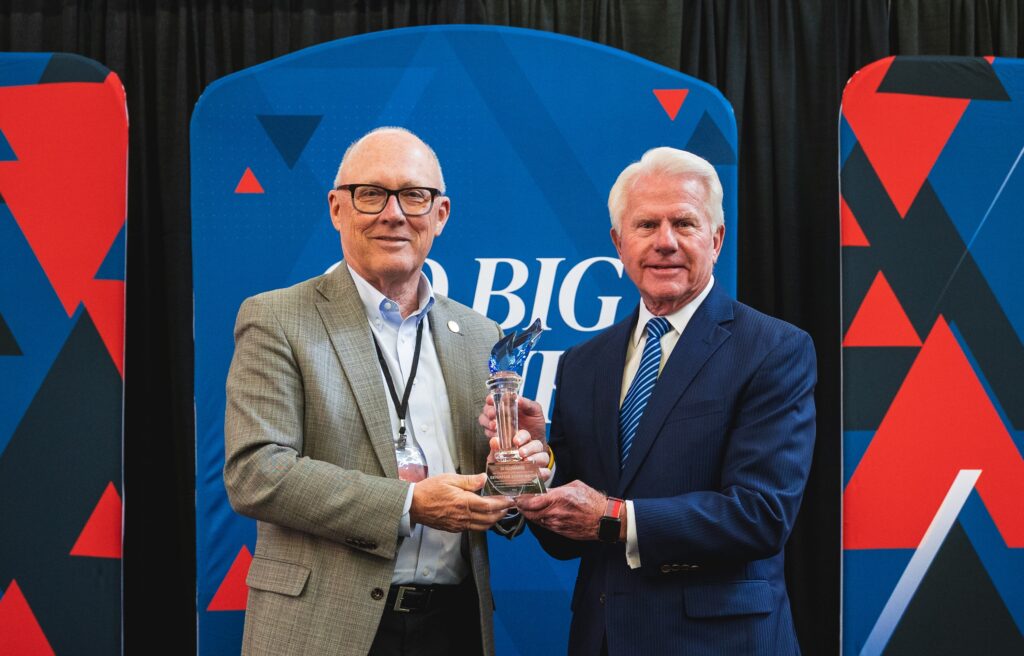
Nebraska Legislature Speaker John Arch received the Nebraska Chamber Foundation’s inaugural Nebraska Compass Award.
The challenges are serious, but Nebraskans have a track record of competing and winning.
“What have we learned,” asked Interim Chamber President Matt Williams, “and what are we doing about it?”
The Chamber Foundation convened Nebraska Impact Wrapped because, so often, industry silos impede our ability to partner for success. And because some changes require public policy, and many simply require conversation and alignment.
When faced with adversity, human beings quit, blame or step up.
“I don’t know one senator who has ever threatened to quit,” Matt Williams said. “I have heard all of us join in the blame game at times — and what do we accomplish then? When you look at it that way, we really only have one choice left…”
Energy That Powers Economic Growth
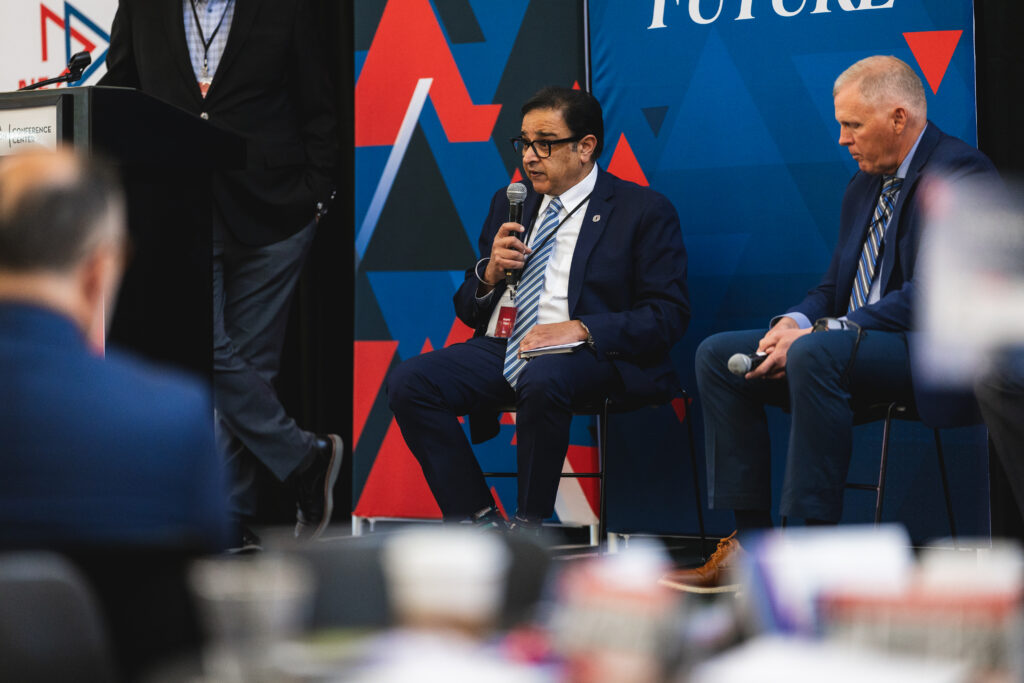
Omaha Public Power District (OPPD) President and CEO Javier Fernandez delivered an impassioned keynote message to end the day.
“Nebraska’s public power system,” he said, “is one of its greatest competitive advantages.”
As the only state in America ranking in the top three in both affordability and reliability, our energy profile is one of a kind. And it didn’t happen by chance. Nebraska’s public power model is a purpose-built system that answers to Nebraskans and directly fuels business growth across the state.
Fernandez said his experience as a Mexican-American immigrant puts the strength of Nebraska’s energy sector into perspective. As other countries wonder if they can conserve enough fuel to make it through the summer, Nebraskans never have to wonder where their electricity will come from. Yet demand is increasingly outpacing growth. The scale of incoming energy requests is unprecedented, as businesses line up to expand here. To put that demand into perspective, OPPD has fielded requests for power totaling more than five times its current load capacity. What took us 80 years to build could be duplicated in just eight.
Fernandez was direct about what comes next: Nebraska’s biggest risk to growth is hesitation. Meeting the modern moment requires faster project permitting, tighter local coordination, broader energy strategies and earlier collaboration between utilities, policymakers and communities.
“Businesses are knocking on our door,” said Fernandez. “We must find a way to open it.”
The Work Begins Now
The future of Nebraska will not be determined by any single leader, government agency or organization. It will be determined by all of us.
The Go Big series moves to Omaha in May to focus on Technology and Innovation. We hope to see you there!
Contact the NE Chamber team.
Drive Alignment.
Build Coalitions.
Find Solutions.
Grow Nebraska.
If you’re reading this and you’re still not sure what to do next, here are a few local ideas to get you started:
- Speak Up: Some of Nebraska’s best solutions will be built from the ground up. Advocate for local policies that grow workforce capacity, strengthen local infrastructure and diversify our energy portfolio at the grassroots level.
- Grow the Conversation: The topic of Nebraska’s BIG future shouldn’t be confined to state or local government. Talk about the data insights with your friends and neighbors. We win when everybody understands the game.
- Champion Solutions: Actively support or participate in local initiatives or pilot projects that aim to expand opportunity and remove barriers for Nebraskans and their families.
Ready to Go Big?
Ready to GO BIG?
Thank You to Our Sponsors