Local Leaders

GO BIG: Nebraskans Convene to Begin Writing the State’s Next Chapter
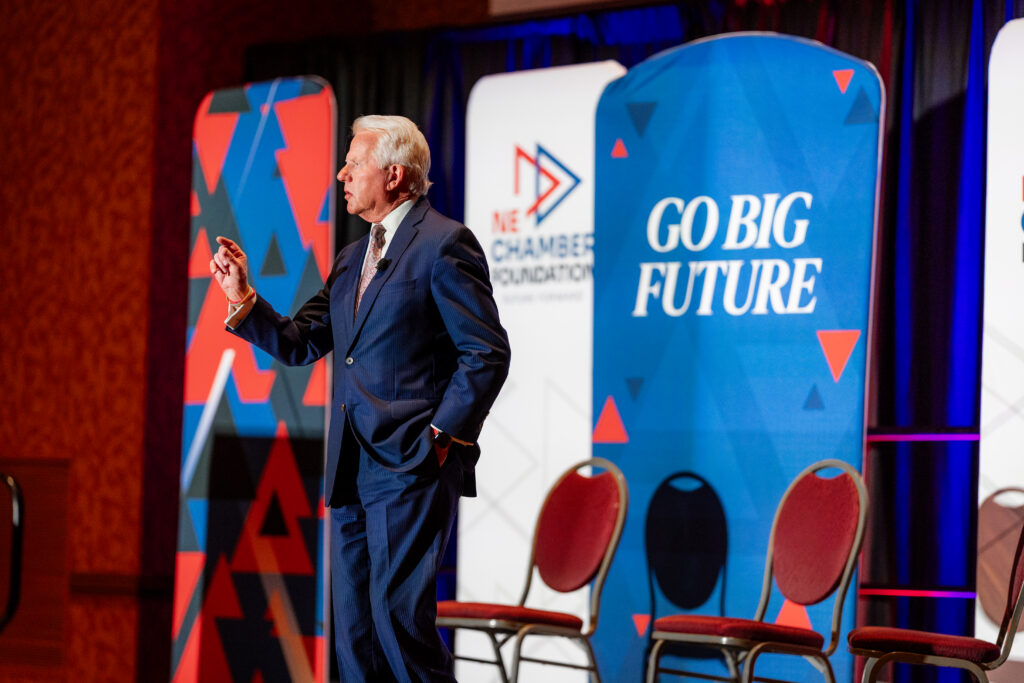
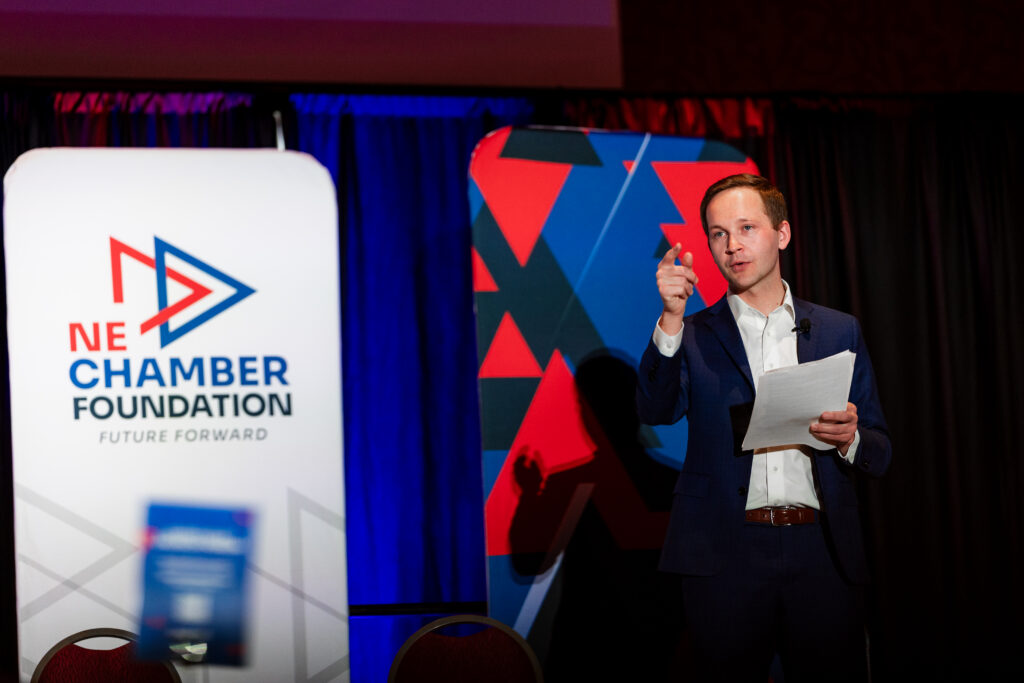
On February 23 and 24, we convened over 100 leaders from across Nebraska for the inaugural event of our GO BIG FUTURE campaign: the Go Big Future Launch Forum.
Not to spend hours unpacking the challenges before us. Not to admire the data we’ve collected over the past few years. But to start an essential conversation about what we’re going to do next.
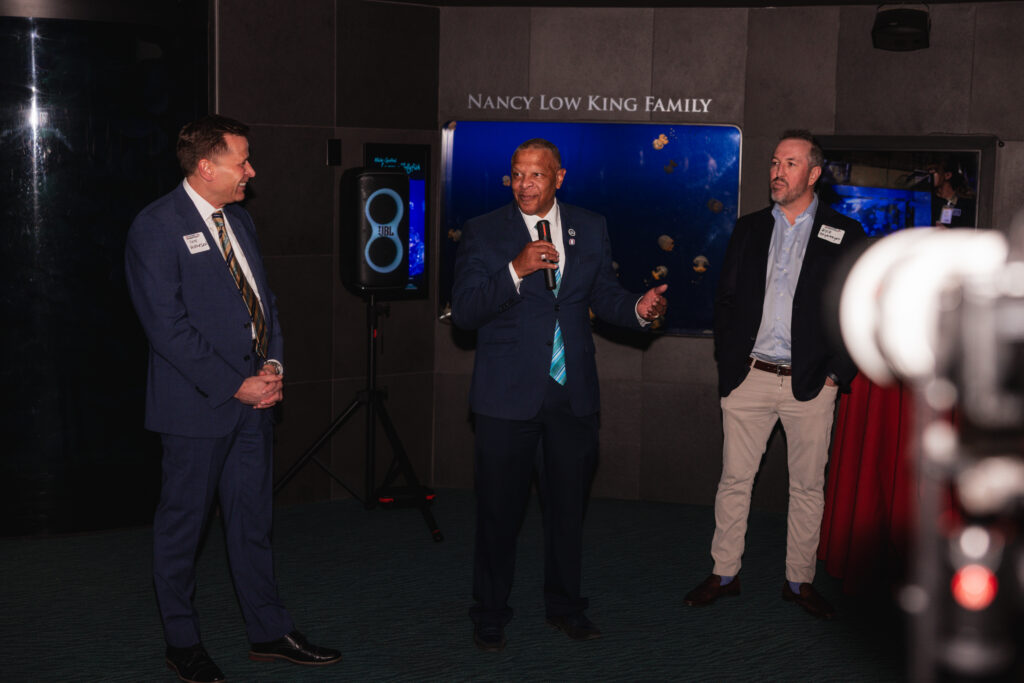
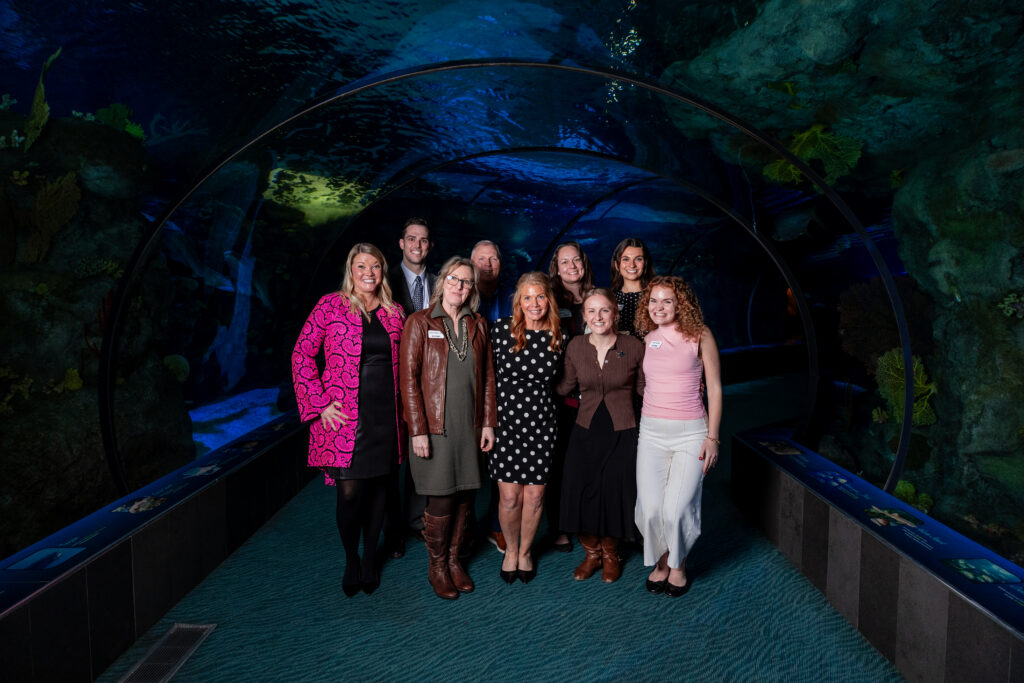
We opened the conversation Monday evening with a networking and cocktail hour at the famed Suzanne and Walter Scott Aquarium. Mayors Kyle Arganbright (Valentine) and John Ewing Jr. (Omaha) compared and contrasted their unique perspectives on how Nebraska’s growth begins at the community level. On Tuesday, we heard from over a dozen of Nebraska’s top influencers across the business, agriculture, manufacturing, technology and policy sectors. We ended Monday afternoon with a powerful talk from keynote speaker and newly announced Nebraska Chamber Interim President Matt Williams.
The forum marked the first step in a larger effort to bring people together who care deeply about Nebraska’s future and equip them with the clarity, alignment and conviction to help shape it.
Why We Came Together
We opened the forum with a simple exercise: We asked leaders in the room to raise their hands if they lead organizations with a clear five- to ten-year growth strategy. Nearly every hand went up. Then we asked: How many of you know the five- to ten-year growth strategy for Nebraska? Hands started dropping.
That moment underscores why this work matters.
Nebraska is home to hundreds of extraordinary leaders, businesses and communities. But, commonly, the transformative work that goes on across the state happens in silos. Those silos might look like individual communities, counties or even industry sectors. The Go Big Future movement is designed to break down those silos and unlock our state’s economic potential.
The Foundation has invested years into building a foundation of multidisciplinary research — understanding our workforce trends, energy advantages, child care challenges and technological transformation.
But data alone cannot achieve growth. People do that.
We have a responsibility to translate data insights into cross-sector alignment — and that alignment into action.
Facing the Truth About Growth in Nebraska
One of the clearest realities we discussed is that growth in Nebraska is not evenly distributed.
Only about 12 of our 93 counties are consistently growing. For many communities — particularly west of the Salt Creek and Missouri River corridors — population decline has become the norm. This demographic trend is a signal that tells us where opportunity is concentrating versus where it’s slipping away.
Nebraska does not lack work ethic or innovative spirit. But if we want to compete in the decades ahead, we must think intentionally about how to harness all the above to stay affordable, competitive and prosperous.
The first step is to define reality.
Child Care and Housing Are Critical Infrastructure
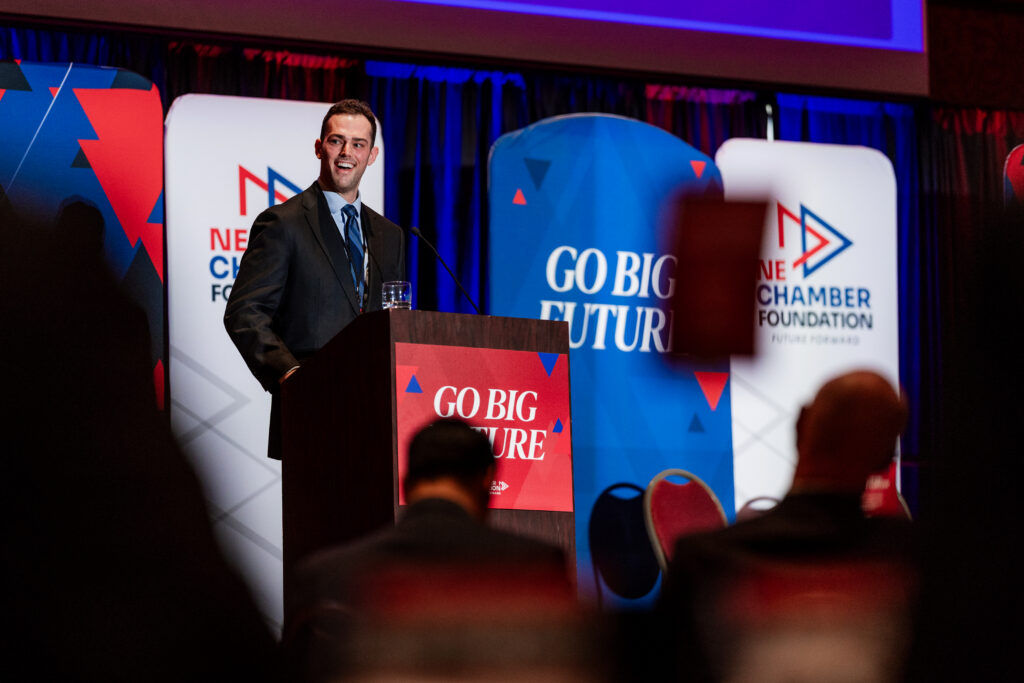
One of the most striking discussions centered on child care — not as a social issue, but as an economic one.
Our research, in partnership with First Five Nebraska and the University of Nebraska–Lincoln (UNL) Bureau of Business Research, shows that Nebraska’s child care shortage costs our state nearly $2 billion annually in lost workforce participation and wages. Even more troubling, the economic weight of Nebraska’s child care deficit has doubled since 2020.
Not only do we face an availability gap for families seeking child care, but the average financial cost of child care now exceeds in-state tuition at the University of Nebraska.
This affects families, certainly. But it also affects Nebraska employers, workforce availability and economic growth.
The Nebraska workforce (and businesses) will be handicapped for as long as parents who want to work cannot fully participate. When businesses suffer, so does our state.
These trends underscore why it’s time to treat workforce, housing, child care, education, energy, technology and economic policy as one interconnected system that requires holistic solutions.
Protecting Nebraska’s Energy Advantage
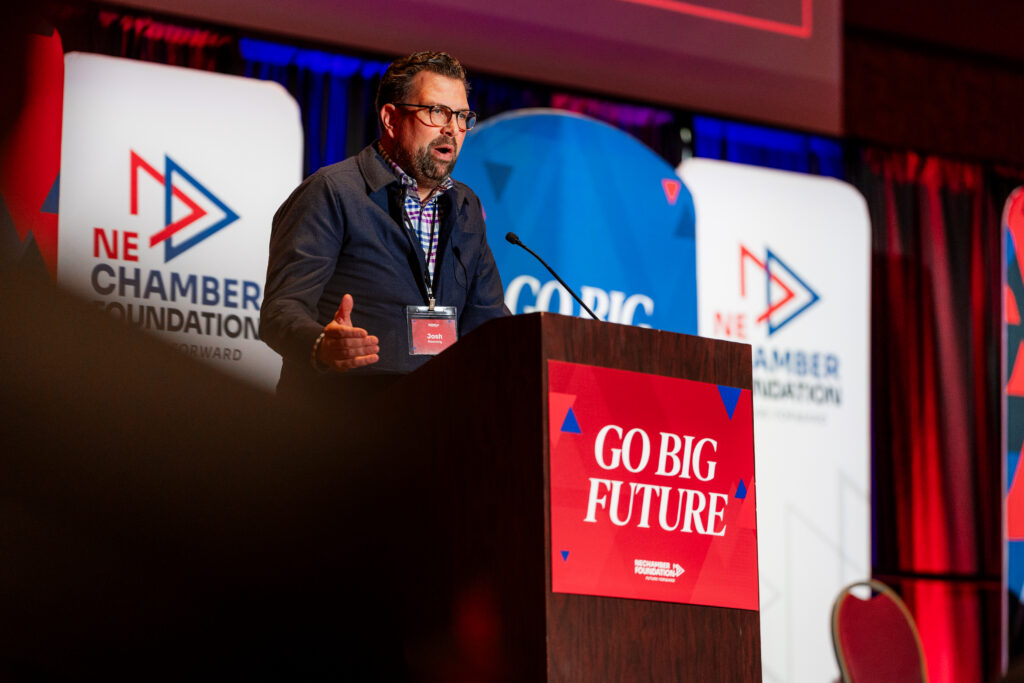
Energy has long been one of Nebraska’s greatest strengths.
Our publicly owned power system has positioned Nebraska as one of the most affordable and reliable energy states in the country. That advantage is not abstract. It is one of the reasons companies choose to locate, invest and expand here.
But demand is rising rapidly — so rapidly, in fact, that the original authors of Blueprint Nebraska had no way of predicting just how essential diversifying the state’s energy portfolio would be. With electricity demand expected to spike by around 30% before 2030, diversifying Nebraska’s grid is of the utmost importance.
Currently, Nebraska ranks third in the nation for wind energy potential and consistently ranks in the top 10 for solar potential. Renewable energy is already contributing tens of millions of dollars annually to our economy, particularly in rural communities. Wind and solar are certainly not the only solutions, but as New Power Nebraska CEO Josh Moenning put it, “If it’s useful, use it.”
The data tells us that defending our state’s energy advantage won’t be enough to compete in a modern economy. We have to go on offense.
Every Company is a Tech Company
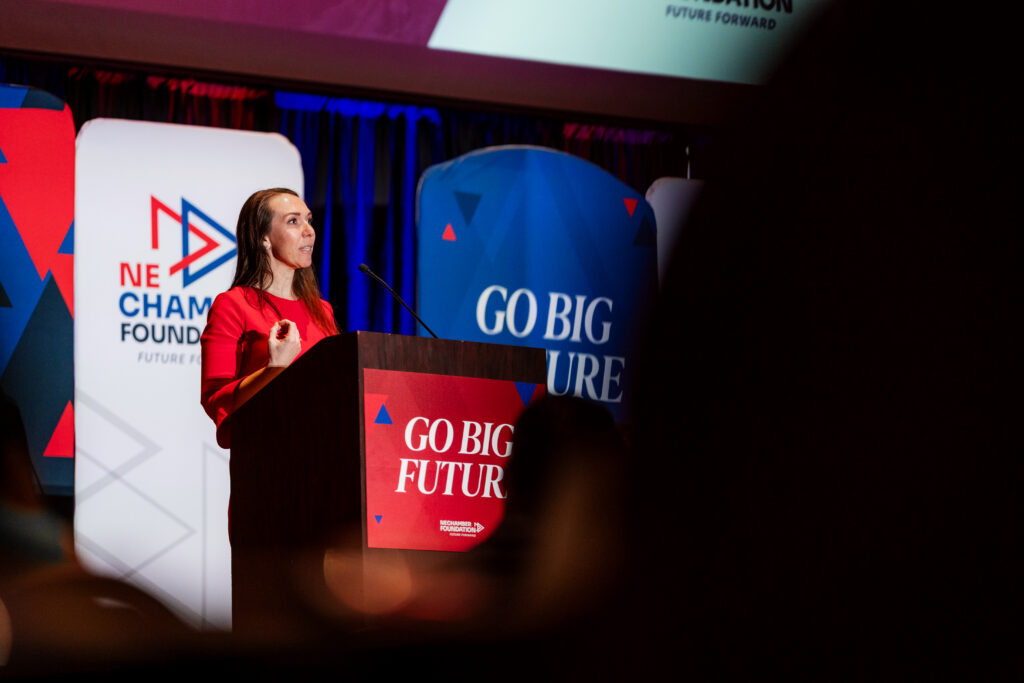
Agriculture is driven by precision data. Manufacturing relies on advanced automation. Health care depends on increasingly sophisticated systems and tools. Every company is a technology company.
Our grasp on advanced technology will determine our state’s economic position in the next 30 years.
This reality elevates the importance of our education systems and the ability of Nebraska communities to attract and retain talent. Institutions like the University of Nebraska play a critical role in the tech and talent ecosystem — not only as educators, but as engines of research, innovation and workforce preparation.
Vision Alone Is Not Enough
Throughout the forum, one message was heard loud and clear: Vision is essential, but vision alone is insufficient.
Vision requires alignment, courage and, most of all, champions. Nebraskans must clearly align on where we are going so we can move in that direction together. Nebraskans across an array of industries, regions and communities must see themselves as active participants in building the future.
The Work Begins Now
The forum was a BIG moment for us to coalesce around a vision, but now the real work begins. As we continue these conversations in the months ahead. We’re asking two questions:
- What does the data say?
- What will we do about it to make Nebraska stronger and more competitive?
Because the future of Nebraska will not be determined by any single organization. It will be determined by all of us.
Contact the NE Chamber team.
Drive alignment.
Build coalitions.
Find Solutions.
Grow Nebraska.
If you’re reading this and you’re still not sure what to do next, here are a few local ideas to get you started:
- Speak Up: Some of Nebraska’s best solutions will be built from the ground up. Advocate for local policies that grow workforce capacity, strengthen local infrastructure and diversify our energy portfolio at the grassroots level.
- Grow the Conversation: The topic of Nebraska’s BIG future shouldn’t be confined to state or local government. Talk about the data insights with your friends and neighbors. We win when everybody understands the game.
- Champion Solutions: Actively support or participate in local initiatives or pilot projects that aim to expand opportunity and remove barriers for Nebraskans and their families.
Thank You to Our Sponsors