Local Leaders

Powering Growth: Nebraska’s Case for an “All the Above” Energy Strategy
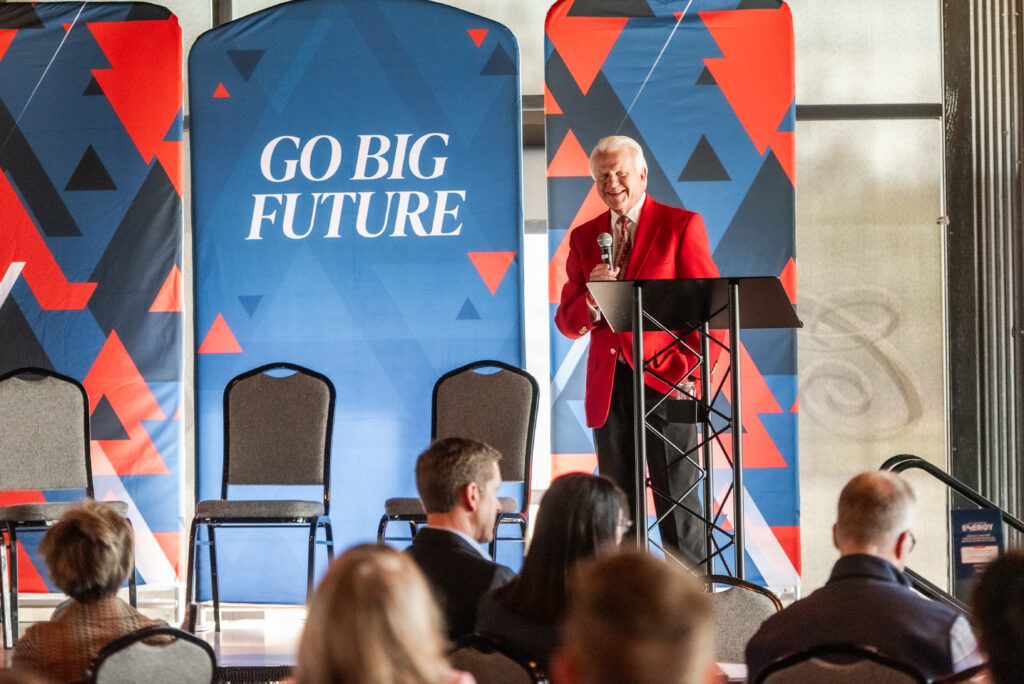
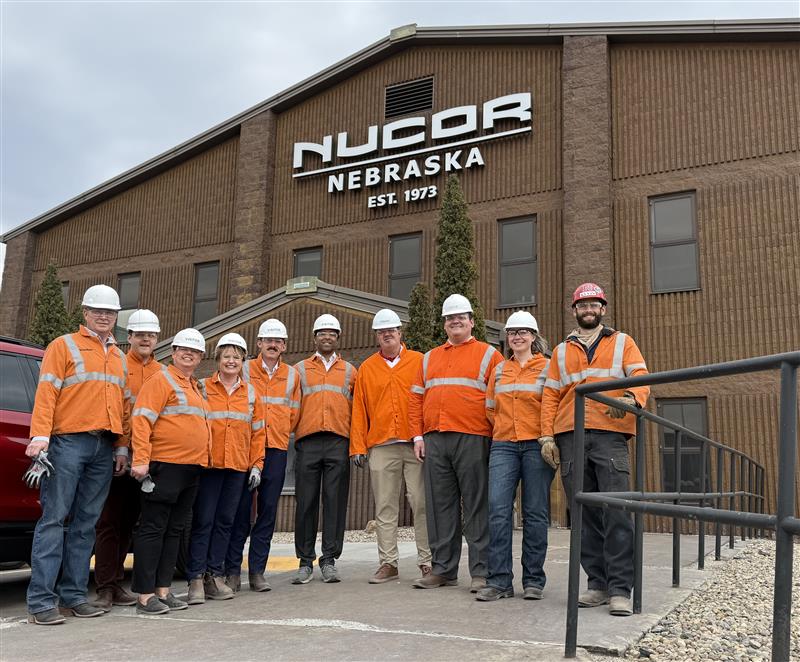
The Go Big series continued its momentum on March 26, 2026, in Norfolk, convening state and local leaders, utility experts and local officials for the “All the Above Energy” forum in rural Norfolk, Nebraska. The experience demonstrated how sustaining a diverse energy portfolio is essential to local industry and long-term economic growth. The day opened with a series of speakers, panels and live Q&A. The lunchtime keynote address was followed by the option of two local industry tours: Nucor Steel and the wind energy program at Northeast Community College.
A New Era of Energy Demand
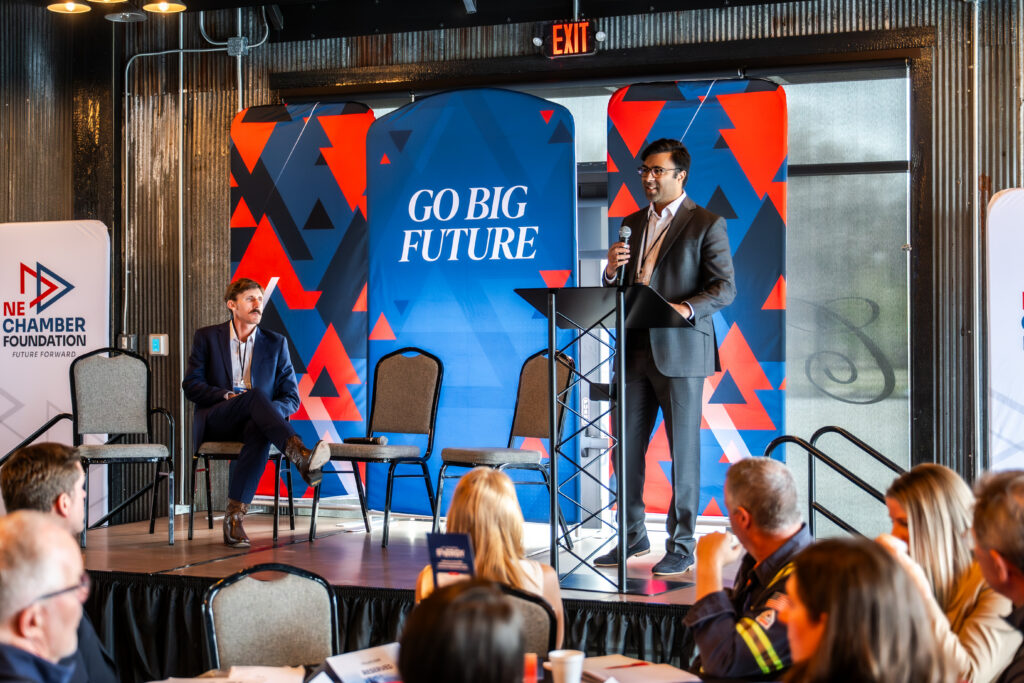
The day’s core message was clear: There is no silver bullet solution that will sustain Nebraska’s legacy of reliable, affordable energy. To remain competitive, Nebraska must embrace a diverse toolkit of energy sources.
1. Renewable Integration & Additive Agriculture
Josh Moenning of New Power Nebraska and local leaders highlighted how wind and solar are providing “additive agriculture” opportunities.
- Landowner Impact: Projects like the Rattlesnake Creek Wind Farm in Dixon County pay out $2.5 million annually to local landowners, providing a crucial safety net when commodity prices are low.
- Property Tax Relief: In one Nebraska school district, wind tax revenues allowed the local levy to drop from $0.92 to just over $0.30, illustrating how energy investment directly supports local services.
2. Natural Gas & National Security
Brandy Johnson of Black Hills Energy emphasized the role of abundant, domestically produced natural gas in providing energy security and supporting heavy industry. On peak cold days, the natural gas system delivers three times the energy of the electrical grid, proving its necessity as a baseload partner.
3. The Nuclear Frontier
Courtney Dentlinger (Nebraska Public Power District) and Jason Fortik (Lincoln Electric System) discussed the accelerating interest in Small Modular Reactors (SMRs). Nebraska is positioning itself as a “fast follower” in nuclear tech, with multiple communities currently competing to host next-generation facilities.
A Case Study for Success: The Pierce County Project
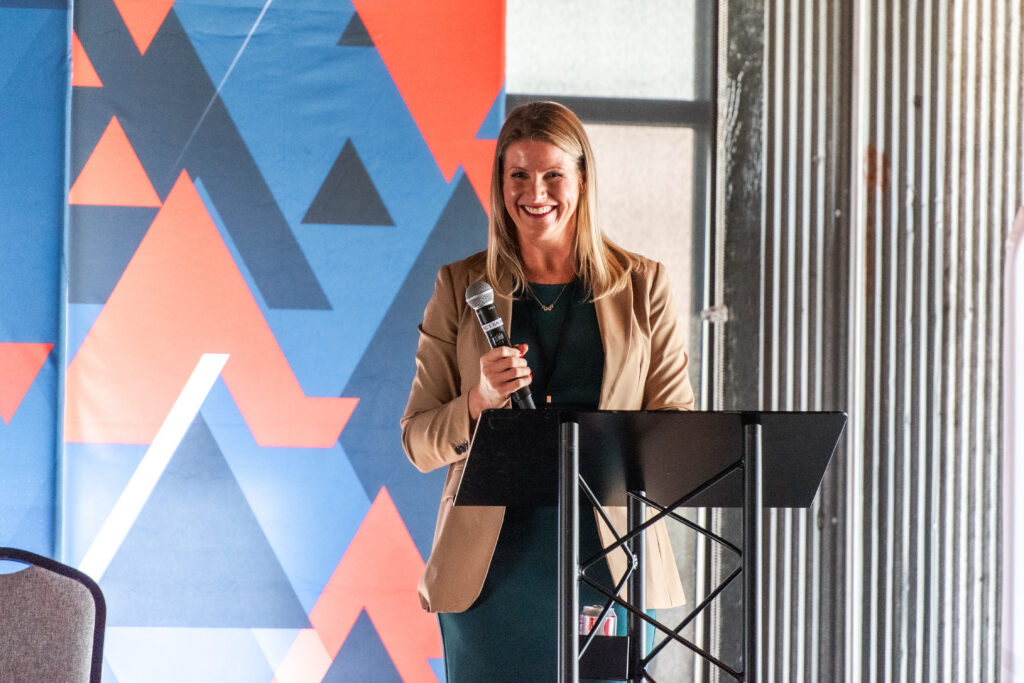
Courtney Dentlinger, Vice President of Customer Services and External Affairs at Nebraska Public Power District, delivered a clear message: Nebraska is entering a period of energy demand not seen in generations.
In the past two years alone, NPPD has added the equivalent of three and a half cities the size of Norfolk to its system load. Dentlinger noted that this level of growth hasn’t occurred since the 1950s, with new industrial projects ranging from 50 megawatts to more than 1,000.
To meet that demand, she emphasized the need for an “All the Above” approach: maintaining a diverse energy mix to ensure reliability and manage risk.
That includes extending the life of existing assets, such as relicensing the Cooper Nuclear Station for another 20 years, while also evaluating future options like Small Modular Reactors. Several Nebraska communities are already competing to host these next-generation facilities.
Dentlinger also underscored the economic implications: sustained investment in energy infrastructure can strengthen the tax base and create a pathway to meaningful property tax relief.
A Talent Pipeline to Fuel Nebraska Energy
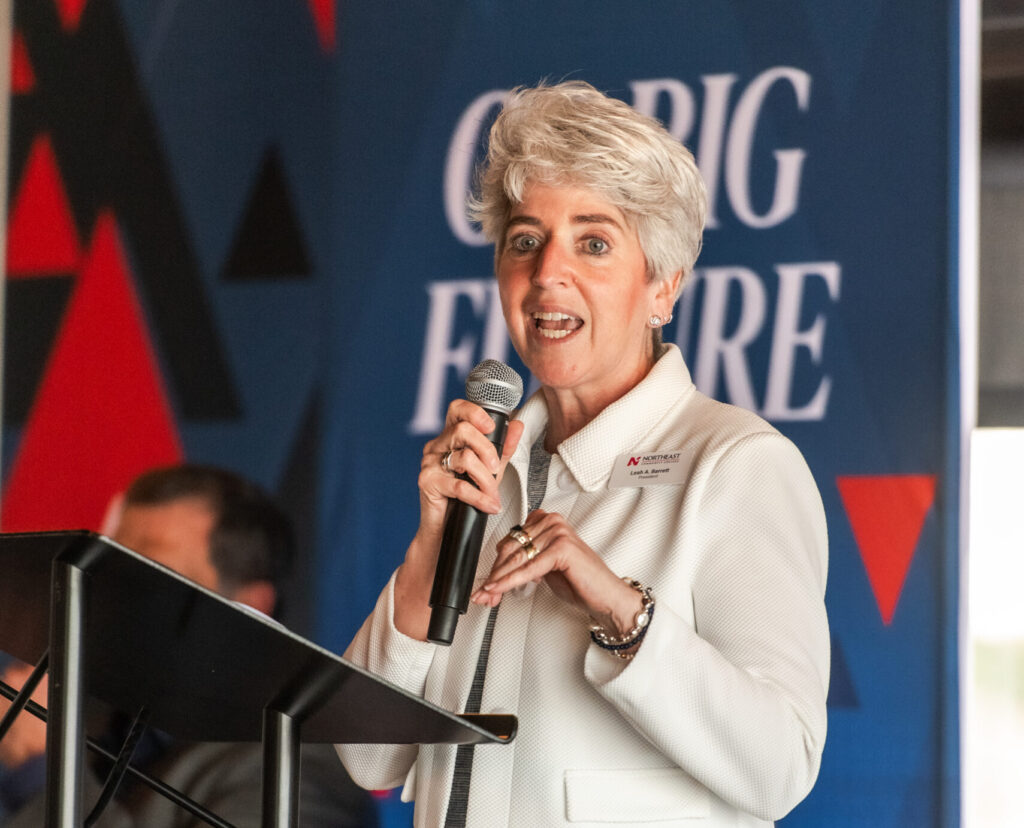
Agriculture is driven by precision data. Manufacturing relies on advanced automation. Health care depends on increasingly sophisticated systems and tools. Every company is a technology company.
Our grasp on advanced technology will determine our state’s economic position in the next 30 years.
This reality elevates the importance of our education systems and the ability of Nebraska communities to attract and retain talent. Institutions like the University of Nebraska play a critical role in the tech and talent ecosystem — not only as educators, but as engines of research, innovation and workforce preparation.
Closing the Gap
The call to action was clear: Nebraska needs consistent statewide leadership and predictable regulatory frameworks to reduce the uncertainty that kills projects. By bridging the gap between local control and statewide necessity, Nebraska can ensure its rural communities remain the installation of choice for the industries of tomorrow.
The Go Big series moves to Omaha in May to focus on Technology and Innovation. We hope to see you there!
Contact the NE Chamber team.
Drive alignment.
Build coalitions.
Find Solutions.
Grow Nebraska.
If you’re reading this and you’re still not sure what to do next, here are a few local ideas to get you started:
- Speak Up: Some of Nebraska’s best solutions will be built from the ground up. Advocate for local policies that grow workforce capacity, strengthen local infrastructure and diversify our energy portfolio at the grassroots level.
- Grow the Conversation: The topic of Nebraska’s BIG future shouldn’t be confined to state or local government. Talk about the data insights with your friends and neighbors. We win when everybody understands the game.
- Champion Solutions: Actively support or participate in local initiatives or pilot projects that aim to expand opportunity and remove barriers for Nebraskans and their families.
Ready to Go Big?
Ready to GO BIG?
Thank You to Our Sponsors